
Making safety reachable, even with no network.
Where there is no network coverage, every minute counts.
Vast regions of Chad and the Sahel have no mobile coverage at all. In the event of an accident, a breakdown or an emergency, the people there can find themselves completely cut off, with no way of alerting their families or the emergency services. That reality affects travellers, hauliers, humanitarian teams, field professionals and the communities living in those regions, every year.
Teskideh was conceived to meet that challenge, with a satellite communication approach suited to conditions on the ground.
The ground we are talking about
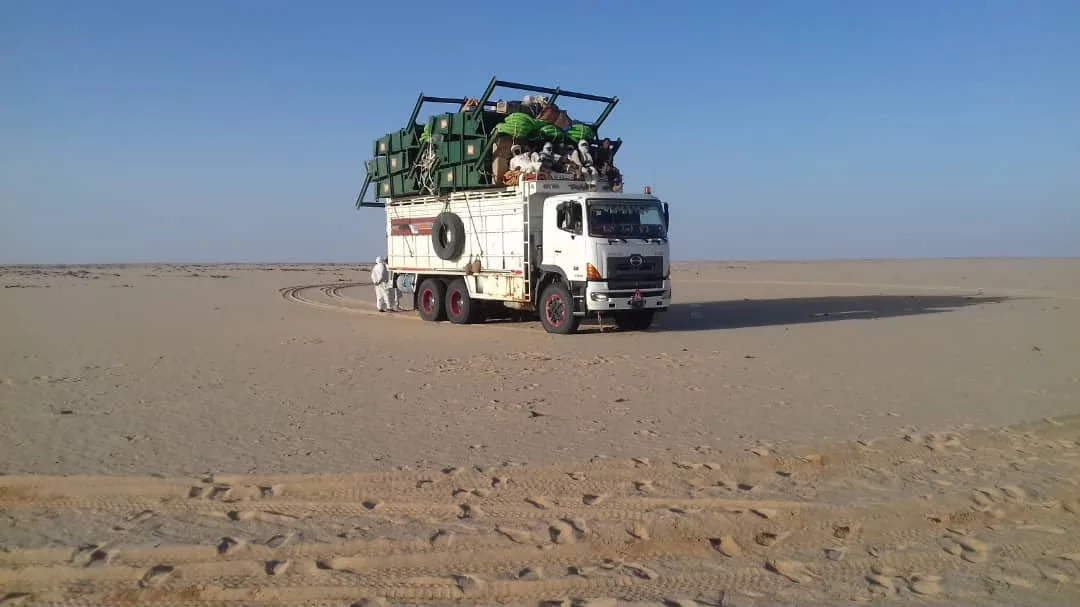
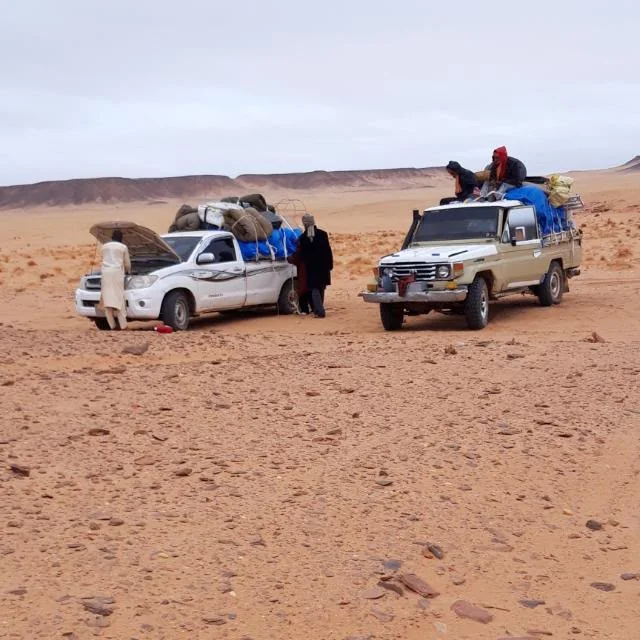
These two photographs were taken on the routes Teskideh is aimed at. Neither comes from a stock image library.
Our answer
At Teskideh, our mission is to protect travellers and professionals working in isolated areas, through reliable satellite communication technology.
We are building solutions able to keep a link with the outside world, even when mobile networks are unavailable.

A teskideh is a guide who knows the way.
In the Gorane language, a teskideh is the guide a caravan took along before crossing the desert. The one who knows the tracks, the landmarks and the wells, and brings everyone safely through even when no trace is visible.
Our beacon carries that name for the same reason a teskideh was taken along in the past: so that nobody faces the vastness alone, and so that everyone can always find the way back to those waiting for them.
The person behind the project
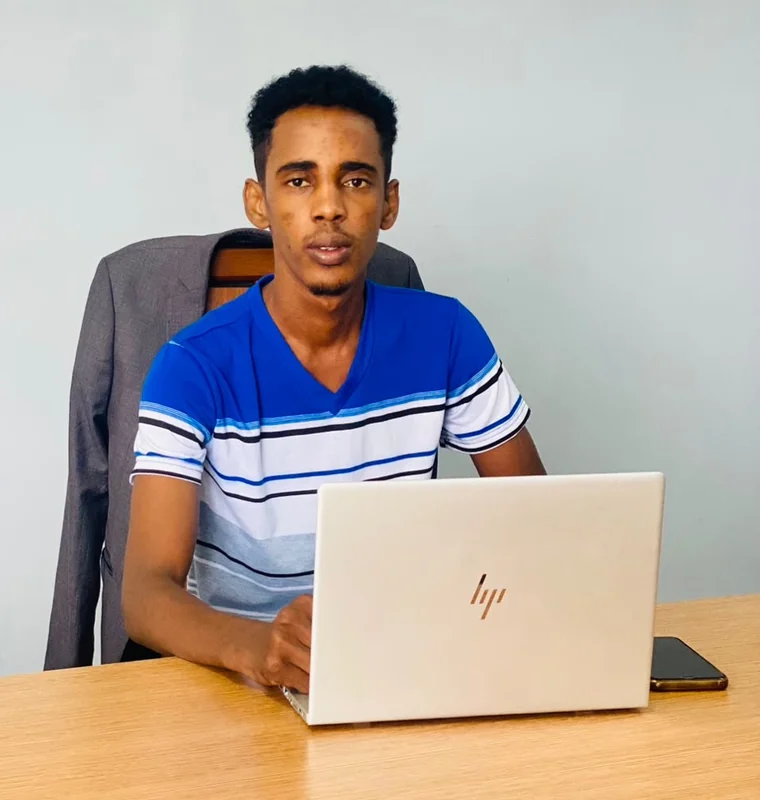
Teskideh is carried by Abakar Idriss Kokoï, developer and embedded systems designer. The project grew out of a simple observation: in many regions of Chad and the Sahel, the absence of network coverage can prevent any call for help in an emergency. Teskideh is building satellite solutions to meet that challenge.
Backend, geospatial database, embedded firmware, satellite architecture: every part of the project was thought out to answer a single question. How do you let someone say "I need help" from a place where no network exists?
I hold a degree in human resources management and a master's in project management. The development side I taught myself: a Python server, a PostgreSQL geospatial database, and embedded C++ for an ESP32-S3 microcontroller.
This page is only worth what it can show. The Technology page sets out the alert chain step by step, with the exact message format and a list of what is proven against what is not.
What I am looking for today. First, funding to build the first fifteen beacons and put them through six months in the field. Then transport companies willing to carry them on the northern routes, because a beacon that has not crossed the Sahara proves nothing.
The project started on 4 June 2026. The app, the accounts and the server chain through to the text message have been built since. My professional profile is on LinkedIn.
Our mission
To let any traveller isolated in the deserts of Chad and the Sahel send a located distress alert, with no telephone network whatsoever.
Our approach
Satellite technology already proven elsewhere, an enclosure thought out for the desert, and a price aimed at the Chadian market rather than imported unchanged from abroad.
Our ambition
To make Chad the first country in the Sahel to deploy its own satellite safety infrastructure, before extending it across the region.